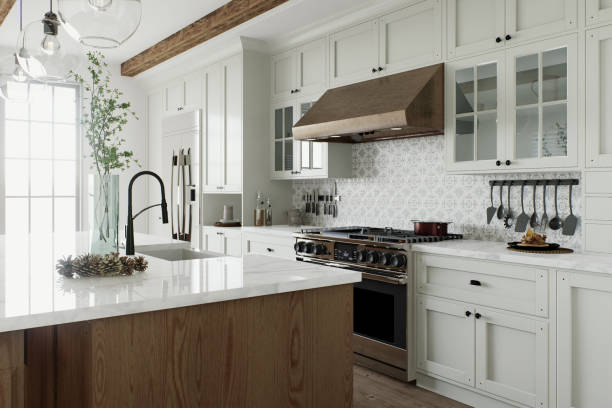
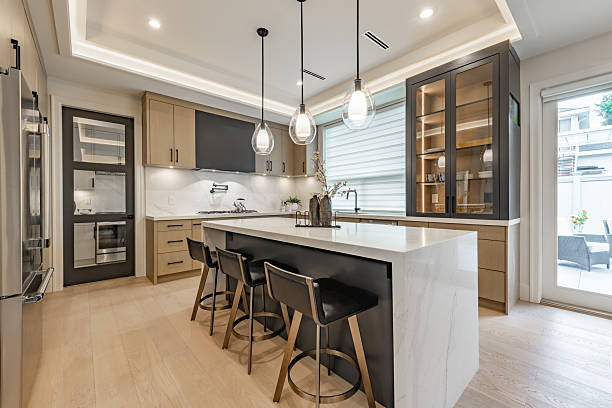
We do not guess at dimensions. We template digitally, plan seams strategically, and install surfaces that last. Quartz, granite, marble, porcelain, and butcher block for kitchens throughout Kingston, WA.
The difference between a countertop installation that looks and performs beautifully for 20 years and one that disappoints within two years is almost entirely in the planning and execution detail rather than in the material itself. At Efficient Kitchen Remodeling, we have built our process around the variables that matter most: accurate templating, intelligent seam placement, correct edge profile specification, and material-specific installation practices that respect the properties of each stone and engineered surface.
Our templating process uses digital measuring technology rather than manual cardboard templates. This matters because digital templates capture corner radii, out-of-square walls, and subtle variations in cabinet level with a precision that manual methods simply cannot match. That precision is what eliminates the field adjustments and grinding that indicate a surface was cut from a template that did not reflect the actual space. Our fabricated pieces arrive on-site ready to install without significant modification because the template captured the space correctly the first time.
Seam placement is one of the most important and least discussed aspects of countertop installation. For kitchens requiring more than a single slab, the location of seams determines both the aesthetic and structural quality of the finished surface. We plan seam locations at corners rather than mid-run wherever possible, avoid placing seams at stress points like sink cutouts or cooktop openings, and orient seam lines with the natural veining of the material when working with marble and quartzite to make the transition as visually continuous as possible. Seam visibility is determined by material choice, with engineered quartz typically producing less visible seams than natural stone, and we discuss this with clients before material selection rather than after.
The thickness you choose affects both the appearance and the structural behavior of your countertop. Standard 2cm slabs are lighter and less expensive, but require plywood underlayment for full support and produce a thinner visible edge profile. The 3cm slab has become the dominant specification in new installations because its additional thickness provides self-supporting strength at overhangs up to 12 inches without brackets, accepts a full-height mitered edge treatment, and presents a more substantial visual presence that reads as higher quality. We default to recommending 3cm for most kitchen applications and explain the specific cases where 2cm with underlayment remains a reasonable choice.
Undermounting your sink correctly requires precise cutting and proper mechanical support. The cutout must be sized exactly to the sink specifications, the edges polished consistently, and the mounting system designed to support the weight of the sink and its contents without transferring stress to the stone at the cutout perimeter. We install undermount sinks as part of our countertop installation service, coordinating the plumbing reconnection timing so that your kitchen has minimal disruption during transition. Backsplash reveal height at the wall, typically 4 inches for a standard tile backsplash and full-height for slab backsplash applications, is planned in conjunction with countertop thickness and cabinet height to ensure everything aligns correctly when the space is complete.
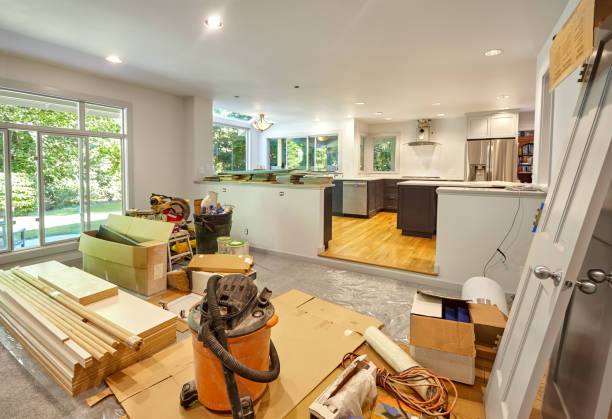
Every material has specific handling, cutting, seaming, and sealing requirements. Our crews are trained on each surface type we install.
Engineered quartz surfaces installed with digital-template precision. Seams planned to minimize visibility given the uniform pattern. Non-porous surface requires no sealing. Ideal for households prioritizing low maintenance alongside appearance.
Full-slab granite installed with natural pattern orientation considered. Each slab is unique, and we photograph your specific slab before cutting to confirm stone selection. Seams matched to natural veining and color distribution. Sealing included at installation.
Marble and quartzite installations for clients who prioritize natural stone character and are prepared to manage the maintenance requirements. Quartzite offers granite-comparable durability with marble-like appearance. We cover care requirements for each material at project completion.
Solid wood butcher block installed with appropriate end-grain or edge-grain orientation for the application. Perimeter sealed at wall contact, surface oil finished. Ideal for islands and prep areas where wood warmth is desired alongside harder stone surfaces elsewhere.
Large-format porcelain surfaces up to 120 by 60 inches installed as countertops or waterfall islands. Highly resistant to UV, heat, and staining. Dramatic book-matched patterns available. Requires specialized handling and installation technique.
Chip repair, crack filling, and professional re-polishing for existing stone surfaces in sound structural condition. An alternative to full replacement when damage is localized or when budget requires a phased approach to kitchen improvement.
Our precision-first approach starts at measurement and runs through the final polish.
We do not use cardboard or foam templates. Our digital measuring system captures every dimension and contour with fabrication-ready precision, eliminating field adjustment and grinding at installation.
Seam locations are mapped during the design phase, not improvised during installation. We share the seam plan with you before fabrication begins so there are no surprises about where joints fall in your finished surface.
From simple eased edges to ogee, waterfall, mitered, and beveled profiles, we offer the full range. Edge profile is a significant visual element, and we bring samples to every consultation so you can make an informed choice.
At project completion, we walk you through care requirements specific to your material. Stone sealing schedules, cleaning product recommendations, and what to avoid are part of every project handoff.
We meet at your home or our showroom, discuss material options, edge profiles, seam strategy, and sink configuration. You select your specific slab before fabrication begins.
After cabinets are fully installed and level, our crew digitally templates your space. This happens at a separate appointment from installation and takes 45 to 90 minutes for a standard kitchen.
Your surfaces are CNC-cut from the selected slab based on the digital template, edges finished, and undermount cutouts made. Fabrication typically takes 3 to 7 business days after templating.
Surfaces are set, seams joined and polished, sink undermounted, backsplash reveal confirmed, and caulk lines finished. We walk through every detail at completion before leaving the project.
The seam placement was the thing I was most nervous about. They showed me the seam plan before fabrication and placed it right at a corner junction so it is essentially invisible. I have to look carefully to find it now. The digital templating clearly makes a difference.
We chose quartzite after they walked us through the differences from marble. The natural movement in the stone is beautiful and the mitered waterfall edge on the island is genuinely stunning. Installed perfectly, no chipping or grinding marks anywhere.
Had a porcelain slab installed for my island and quartz for the perimeter runs. They handled both materials in the same installation and the finished result looks completely intentional and cohesive. The undermount sink cut is impeccably clean.
Our fabrication and installation team serves homeowners throughout Kingston and the surrounding Kingston, WA region. We bring our digital templating equipment, full edge sample set, and slab selection to every consultation.
Notice: Efficient Kitchen Remodeling is a free referral service designed to assist homeowners and businesses in connecting with independent local contractors. All contractors and service technicians are independent and Efficient Kitchen Remodeling does not warrant or guarantee any work performed. It is the responsibility of the customer to verify that the hired contractor furnishes the necessary license and insurance required for the work being performed. All calls are routed to independent local service providers.